
Crime Fiction
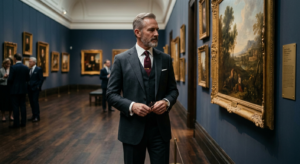
The Custodian: Confessions of a Relic Trafficker
L F Peterson (C) Copyright 2026
“THE CUSTODIAN is that rare novel that makes you question everything you thought you knew about right and wrong in the world of priceless looted artifacts. Alexander Corso is neither hero nor villain, but something far more interesting—a man caught between preservation and possession, between saving history and stealing it.”
“Peterson has crafted an intellectual thriller that reads like John Grisham meets The Goldfinch. The courtroom scenes crackle with tension, but it’s the moral ambiguity that will keep you thinking long after the final page.”
“A brilliant examination of cultural heritage in our fractured world. THE CUSTODIAN asks the hardest question: When governments fail and history burns, who decides what’s worth saving—and at what cost?”
“Peterson’s prose is as refined as the looted antiquities his protagonist collects. This is a novel of ideas wrapped in a page-turning plot, where every character—from the dogged prosecutor to the conflicted daughter—feels achingly real.”
—The New York Times Book Review
“THE CUSTODIAN does what the best fiction should: it complicates our certainties. In Alexander Corso, Peterson has created a character who embodies our contemporary dilemmas about ownership, preservation, and the price of doing the greater good in an imperfect world.”
The auction room at Christie’s Rockefeller Center hummed with the particular energy only accompanies the exchange of obscene amounts of money. Alexander Corso sat in the third row, his posture relaxed, his Brioni suit perfectly tailored to his lean frame. At forty-five, he possessed the kind of weathered handsomeness suggesting wealth, intellect and purpose – – silver threading through dark hair, lines around his eyes speaking of late nights in study and passionate commitment to his life’s work as an art preservationist.
The auctioneer’s voice cut through the murmur: “Lot 247. An Etruscan bronze warrior, circa 500 BCE. Exceptional preservation. We’ll start the bidding at two million dollars.”
Corso didn’t move. Not yet. He knew full well how the auction would play out.
Around him, museum representatives shifted in their seats. He recognized the woman from the Getty, the man from the Metropolitan Museum of Art. They had budgets, boards, and bureaucratic red tape to contend with. He had none of these constraints – – and more importantly, he had the will to act.
“Two million,” came a voice from the back.
“Two point two,” the Getty representative said, her voice steady but her knuckles white around her paddle.
Corso studied the bronze warrior projected on the screen – – thirteen inches of ancient artistry, the warrior’s face frozen in eternal determination. The provenance documentation had been disputed. Some claimed it was looted from an Etruscan tomb in the 1970s. Others insisted it was in a private Swiss collection since 1968, before the relevant UNESCO conventions took effect.
The ambiguity was precisely what made it available – – and precisely why it needed someone like him.
“Two point five,” the Met curator offered.
“Three million,” Corso said quietly, raising his paddle with minimal effort.
Heads turned. They always did.
“Three point two,” the Getty representative countered, but there was defeat already creeping into her voice. She knew her budget ceiling. He had no ceiling.
“Four million,” Corso said, his tone unchanged, as if he were ordering coffee.
Silence descended. The auctioneer waited the requisite interval. “Four million once… four million twice…”
The Getty representative’s paddle twitched but didn’t rise. She would return to her board empty-handed, forced to explain how budget constraints prevented them from acquiring a masterpiece. The warrior would sit in some committee review for eighteen months before they decided whether to pursue it through “proper channels” – – by which time it would have vanished into a private collection in Dubai or Shanghai, never to be seen again.
“Sold, for four million dollars, to paddle number 127.”
Corso set down his paddle and allowed himself the smallest smile. Another piece preserved. Another fragment of human history saved from the grinding wheels of institutional paralysis.
The Getty representative turned to look at him, her expression a mixture of frustration and grudging respect. She knew what he knew: without collectors like him, half the objects in her museum would never have survived the twentieth century.
As the auction continued, his phone vibrated. A text from his lawyer, Matt Webb: Geneva situation developing. Call when you can.
Corso’s smile faded. There was always a situation developing.
He’d been navigating situations for twenty years. Undoubtedly, he’d navigate this one too.
The penthouse occupied the entire forty-second floor of a building where the monthly maintenance fees exceeded most people’s annual salaries. Floor-to-ceiling windows offered a panoramic view of Manhattan – – the park a dark rectangle to the north, the city lights spreading like a jeweled net in every direction.
Corso stood in his private gallery, a climate-controlled room where his most prized acquisitions resided. The Etruscan bronze would join them soon, after proper authentication and documentation. For now, he contemplated a Greek kylix from the fifth century BCE, its red-figure painting depicting Achilles and Ajax playing dice.
“You paid too much,” a voice said behind him.
Corso didn’t turn. “Good evening, Matt.”
Matt Webb entered the gallery, his lawyer’s briefcase in hand, his expression carrying the particular weariness of a man who spent his life navigating spaces between legal systems. At fifty-three, Webb represented everyone from hedge fund managers to minor European royalty. Corso was his most challenging client and his most principled.
“The bronze is worth three million, maximum,” Webb continued. “You paid four.”
“I paid what was necessary to ensure it didn’t disappear into a museum basement for the next fifty years,” Corso replied. He finally turned from the kylix. “Or worse, into a private collection in Shanghai where it would never be studied, never be displayed, never contribute to human knowledge. What’s happening in Geneva?”
Webb set down his briefcase and pulled out a tablet. “My contact at Interpol says there’s unusual activity. Surveillance focused on the storage facility. They’re building toward something.”
“The documentation is perfect.”
“Documentation is always perfect until prosecutors decide it isn’t.” Webb swiped through files on his tablet. “The federal prosecutor – – Sarah Smith, Department of Homeland Security – – she’s been building a case for eighteen months. She’s ambitious, Yale Law, top of her class, and she thinks you’re the apex trafficker in an international looting network. Basically, you are considered her arch villain and a trophy on her resume.”
Corso moved to the window, his reflection ghostly against the city lights. “I purchase antiquities through legitimate dealers with documented provenance chains. Every object I acquire is legal under international law.”
“You exploit gray areas in international law,” Webb corrected. “There’s a difference between unquestionably legal and defensibly legal.”
“Gray areas exist because governments can’t agree on how to protect cultural heritage,” Corso said, his voice carrying the passion of someone who’d spent two decades thinking about this. “I preserve history they would let rot in bureaucratic limbo. Do you know how many objects the Syrian government ‘protected’ before ISIS arrived? Zero. They had no budget, no security, no plan. I saved seventeen objects from Syrian sites. Otherwise they would be rubble. Seventeen pieces of human history future generations can study because I acted when governments couldn’t or wouldn’t.”
“Smith doesn’t see nuance. She sees looted artifacts from Syria, Iraq, Cambodia – – war zones where archaeological sites are being systematically destroyed. And she sees you buying pieces appearing on markets shortly after.”
“Correlation isn’t causation.”
“Tell it to a jury.” Webb pulled up a document. “She has informants. Dealers who’ve sold to you. Shipping coordinators who’ve handled your freight. She’s mapping your network.”
Corso turned from the window. “Every dealer I work with is licensed. Every transaction is documented. Every object has provenance tracing back before the relevant UNESCO conventions. I’ve broken no laws.”
“You’ve broken no laws she can prove,” Webb said. “Yet. But she’s persistent, and she has resources. The question isn’t whether you’re legal – – the question is whether you can prove you’re legal when she comes knocking.”
Through the windows, the city glittered with indifferent beauty. Somewhere out there, Sarah Smith was building her case, piece by piece, document by document. Somewhere, informants were being cultivated, surveillance footage reviewed, connections mapped.
Corso spent twenty years building his collection, his reputation, his network of preservation. He had a Ph.D. from Harvard, estates in Monaco and Santorini, relationships with diplomats and museum curators across three continents. He’d donated over $50 million to museums and universities. He’d funded archaeological excavations in Turkey, Greece, and Jordan. He’d established scholarships for students studying cultural heritage protection.
“What do you recommend?” he asked.
“Move the Geneva inventory. Tonight, if possible. I have a diplomatic shipment leaving for Singapore in the morning. Forty-seven crates can be included.”
“Less expensive than losing everything. Consider it the lesser of evils.” Webb met his eyes. “They’re coming, Corso. We know the why. The only question is the when.”
Corso walked back to the kylix, studying the ancient painting. Achilles and Ajax, heroes of the Trojan War, playing dice during a lull in the fighting. The artist who painted this had been dead for 2,500 years. The civilization producing it collapsed millennia ago. But the kylix survived – – because collectors preserved it, generation after generation, protecting it from wars and revolutions and the simple entropy of time.
Without collectors, it would be dust.
“Make the arrangements,” he said quietly. “Move everything. But Matt? I’m not a criminal. I’m a preservationist. I’m not going to let an overzealous prosecutor destroy twenty years of work protecting human heritage.”
“Then we’d better make sure she can’t prove otherwise.”
Chapter 3: The Federal Prosecutor
Sarah Smith’s office in the Department of Homeland Security’s Cultural Property division was a study in bureaucratic austerity. Gray walls, fluorescent lighting, a desk buried under file folders and evidence binders. The only personal touch was a framed photograph of her graduation from Yale Law – – her parents flanking her, their pride evident even in a still image.
Her pride carried her through three years of prosecuting cases no one wanted. Cultural property crimes were the unglamorous backwater of federal law enforcement. No drug cartels, no terrorism, no headlines. Just stolen art and ancient objects, and the painstaking work of tracing them through layers of shell companies and dubious documentation.
But Sarah learned something in those three years: follow the antiquities, and you’d find everything else. Money laundering. Tax evasion. Organized crime. And occasionally, if you were lucky, someone worth taking down like Alexander Corso.
“Tell me again why we can’t touch him,” she said.
Across from her desk, Special Agent David Brown pulled up files on his laptop. Brown was FBI, on loan to the task force, and he displayed the particular exhaustion of someone who’d spent eighteen months chasing ghosts.
“Because he’s smart,” Brown said. “Every purchase goes through legitimate dealers. Every object has documentation tracing provenance back before the relevant UNESCO conventions. Every transaction is properly reported for tax purposes. On paper, he’s cleaner than most museums.”
“The documentation is forged.”
“Probably. But proving it requires expert analysis, and experts disagree. His experts say authentic. Our experts say suspicious. A jury sees reasonable doubt.”
Sarah stood and walked to the evidence board dominating one wall of her office. Photographs, documents, and red string connecting them in an elaborate web. At the center: Alexander Corso’s official portrait, taken from a Harvard alumni magazine. He looked distinguished, intellectual, trustworthy.
She’d learned to distrust photographs.
“Walk me through it again,” she said.
Brown joined her at the board. “Corso is the apex buyer. We’ve identified at least three major smuggling networks – – one operating out of Turkey and Syria, one in Cambodia, one in Iraq. Different networks, different operators, but they all have one thing in common: objects they move end up in Corso’s collection within six to eighteen months.”
“Gray market intermediaries. The objects get laundered through countries with lax antiquities laws – – Thailand, Switzerland, UAE. They acquire provenance documentation. Then they’re sold to ‘legitimate’ dealers in London, Geneva, New York. Corso purchases from these dealers, and legally, he’s clean. He’s buying from licensed dealers with proper paperwork.”
Sarah traced the red lines with her finger. “But he knows. He has to know.”
“Knowing and proving are different things. The legal standard is ‘willful blindness’ – – did he deliberately avoid learning the truth? His defense will be he relied on expert opinions and documentation. That’s reasonable.”
Brown pulled up another file. “We have three. One is a shipping coordinator in Geneva who’s handled Corso’s freight. One is a dealer in Bangkok who’s sold him Cambodian pieces. One is a Turkish smuggler who claims to have met Corso personally in Istanbul.”
“The meeting was in a hotel bar. No photographs, no recordings. Corso’s passport shows he was in Turkey that week, but he was attending an archaeological conference. Perfectly legitimate reason to be there.”
Sarah returned to her desk and opened the thickest binder – – eighteen months of surveillance, financial records, and transaction histories. “He’s moved over $300 million through his accounts in the past five years. That’s not collecting. That’s trafficking.”
“He also donates extensively to museums and universities. He’s published papers in archaeological journals. He sits on the board of three cultural heritage foundations.” Brown’s voice carried a note of grudging respect. “He’s built a perfect cover. Or he genuinely believes he’s a preservationist.”
Sarah looked up sharply. “You sound like you admire him.”
“I admire the sophistication of his operation. That doesn’t mean I think he’s innocent.” Brown pulled up a photograph. “But Sarah, we need to be honest about what we’re up against. Corso isn’t some tomb robber selling artifacts on eBay. He’s a Harvard Ph.D. who’s spent twenty years building relationships with the world’s top archaeologists and museum curators. Half of them will testify on his behalf. They’ll say he’s saved more artifacts than he’s harmed.”
“By creating a market incentivizing looting.”
“That’s our argument. His argument is he’s preserving objects that would otherwise be destroyed. And here’s the uncomfortable truth: sometimes he’s right.”
Sarah stared at him. “Whose side are you on?”
“I’m on the side of building a case that won’t collapse in court. Right now, we have circumstantial evidence and suspicious patterns. We need something concrete. We need him to make a mistake.”
Chapter 4: The Damascus Connection
The call came at 3 AM, which was never a good sign.
Corso was in Monaco, in the master bedroom of his villa overlooking the Mediterranean. The room was decorated in understated elegance – – white linens, minimalist furniture, a Modigliani sketch on the wall he purchased at Sotheby’s for $2.3 million.
He answered on the second ring. “Dr. Mansour.”
“Alexander.” The voice was strained, exhausted. Dr. Rashid Mansour was the director of the Damascus Archaeological Museum – – or had been, before the civil war turned his life’s work into a battlefield. “I need your help.”
Corso was already out of bed, pulling on clothes. In the background of the call, he could hear distant explosions. “Where are you?”
“Still in Damascus. In the old city. Alexander, they’re coming tomorrow.”
“ISIS. Al-Nusra. Does it matter? They’re coming, and they’re going to destroy everything.” Mansour’s voice cracked. “The museum is already looted. The government took what they could to secure locations, but there’s no room, no budget, no plan. Everything else is just… sitting here. Waiting to be destroyed.”
Corso walked to his window, looking out at the peaceful Mediterranean. A world away, Damascus was burning. “What do you need?”
“I can save twelve pieces. Twelve. Out of thousands. I have a truck. I have a driver willing to risk the journey to Lebanon. But I need money for bribes at checkpoints, for storage in Beirut, for documentation to get them out of the country legally.”
“Two hundred thousand dollars. And Alexander… I need it by tomorrow. If I wait any longer, there won’t be anything left to save.”
Corso pulled out his phone and opened his banking app. “What are the pieces?”
“Palmyra reliefs. Four panels from the Temple of Bel. First century CE. They’re in a private collection abandoned when the family fled to Turkey. The house will be in the combat zone by tomorrow. If we don’t move them now, they’ll be destroyed when the fighting reaches that neighborhood.”
“The Temple of Bel panels.” Corso closed his eyes. He’d seen photographs. Limestone reliefs depicting funeral processions, priests in ceremonial robes, the daily life of a civilization that had thrived 2,000 years ago. Irreplaceable. “Send me the account information. You’ll have the money in an hour.”
“Alexander, you understand what this means? These pieces have no export permits. The Syrian government is in chaos – – there’s no one to issue permits even if we wanted them. The documentation will have to be… arranged.”
“If you’re caught, if anyone traces these back to me – – “
“No one will trace anything back to you. You’re saving Syrian cultural heritage. That’s all anyone needs to know.” Corso paused. “Rashid, how many pieces has the museum lost?”
Silence on the line. Then: “We had 300,000 objects in our collection. We saved maybe 10,000. The rest are gone. Looted, destroyed, scattered. Syria’s history is being erased forever, and the world is watching it happen.”
“Not all of it. Not these twelve pieces. Send me the account information.”
After the call ended, Corso stood at his window for a long moment. Two hundred thousand dollars. For twelve pieces with no legal provenance, no export permits, no documentation to survive scrutiny by customs officials or prosecutors.
Twelve pieces saved because he acted, or would become rubble because he didn’t.
END OF SAMPLE