
Romance
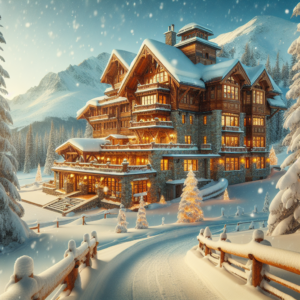
A Christmas Miracle: A Second Chance at Forever
A romantic novel by Lawrence F Peterson
When architect John Brown returns to his family’s Montana lodge for Christmas, he expects nothing more than familiar traditions and his mother’s legendary cooking. What he doesn’t expect is Jill Summers, the woman who broke his heart fifteen years ago, waiting by the fireplace.
Their reunion should be awkward. Instead, it’s electric. Between sunrise ski runs and blizzard rescues, John and Jill rediscover the connection that once made them inseparable. But when a tabloid scandal forces Jill to reveal the secret she’s kept for fourteen years, their son, everything changes.
Michael is brilliant, funny, and understandably angry about the father he never knew. As John grapples with lost years and newfound fatherhood, he must decide: Can he forgive the past to build a future? And can three broken pieces become one family?
A Christmas Miracle is a heartwarming tale of love lost and found, of the courage it takes to tell the truth, and of families that form in the most unexpected ways. L.F. Peterson delivers a story that will make you laugh, cry, and believe in second chances, proving that sometimes the best gifts come wrapped in complications.
Perfect for fans of emotional family sagas and holiday romance, this novel reminds us that it’s never too late to come home.
“A beautifully crafted story of redemption, forgiveness, and the enduring power of love.”
“Peterson masterfully weaves together past and present, creating characters so real you’ll feel like part of the family.”
“More than a Christmas story—it’s a testament to the families we choose and the courage it takes to build them.”
Chapter 1: Unexpected Arrival
The Cessna Citation’s engines wound down to a whisper as John Brown pulled off his headset and stared through the cockpit window at the unfamiliar Beechcraft King Air parked beside the family hangar. He’d made good time from Albuquerque, two hours and forty minutes wheels-up to wheels-down, despite unfavorable weather at FL410. The Citation performed flawlessly, as always, her twin Williams engines purring through the thin air at 41,000 feet while he monitored fuel flow and watched the Rockies slide beneath him like a wrinkled white blanket.
The approach into the family’s private strip required his full attention. The narrow runway, carved into a mountain valley at 6,800 feet MSL, wasn’t for amateur pilots. He’d flown the pattern visually, circling to lose altitude while fighting the notorious downdrafts plaguing the canyon. The Citation’s spoilers deployed with characteristic thump on touchdown, and he applied reverse thrust carefully. The last thing he needed was to slide off the icy runway and give his father another reason to lecture him about winter operations.
Snow swirled in lazy patterns across the private airstrip, catching rays of December sunlight painting Montana’s mountains in shades of rose and gold. John completed his shutdown checklist with practiced efficiency, fuel selectors off, batteries off, pitot heat off, then sat for a moment in the sudden quiet, studying the King Air.
The Beechcraft was a beauty, a newer model, well-maintained, with custom paint screaming money. Whoever flew it knew what they were doing. Landing a twin turboprop on this strip in December took skill and nerve. The Brown family lodge rarely saw visitors this time of year, that was the whole point. Christmas meant family, privacy, and a blessed escape from the architectural firm consuming his every waking hour.
0
John grabbed his leather overnight bag and descended the aircraft, his breath forming clouds in the crisp mountain air. The temperature dropped twenty degrees since his departure from Albuquerque, but the familiar bite of Montana winter felt like coming home. His Italian leather shoes, completely inappropriate for the conditions, crunched through fresh powder as he made his way toward the lodge, casting one more curious glance at the mysterious King Air. Did his father purchase another plane?
The massive log structure rose before him like something from a luxury resort magazine, though calling it a “lodge” barely did it justice. His grandfather built the original cabin in the 1950s, but his father expanded it over the decades into something approaching a small hotel. The main building stood three stories tall, constructed from massive Douglas fir logs trucked from Oregon, each one hand-selected and fitted. The logs weathered to a rich honey-brown, and in the fading light, the logs seemed to glow from within.
The central great room dominated the structure, its floor-to-ceiling windows rising two full stories offering a panoramic view of the valley and mountains beyond. John could see the massive river rock fireplace through the windows, flames already dancing behind the glass. Twin stone chimneys bracketed the main building, with a third rising from the west wing, his mother never did anything by halves when it came to keeping her family warm.
The lodge sprawled in a rough H-shape. The east wing housed six guest suites, each with its own bathroom and private balcony overlooking the pine forest. The west wing contained the family’s private quarters, his parents’ master suite, his childhood bedroom (preserved like a museum), his sister Emma’s room, and two additional bedrooms for visiting relatives. A covered breezeway connected the wings to the main building, creating a sheltered courtyard holding his mother’s ambitious garden in the summer and a wonderland of ice sculptures and fairy lights in the winter.
Above the main great room, a third-floor loft served as his father’s study and library, accessible by a dramatic spiral staircase of twisted juniper wood. The style was an architectural wonder. Dormers jutted from the steep metal roof, necessary for shedding Montana’s heavy snows. Each one was outlined in white lights his mother installed.
The wraparound porch extended the full perimeter of the main building, wide enough for rocking chairs, porch swings, and the hot tub his parents added five years ago. Log railings, intricate and sturdy, were already dressed for Christmas. His mother outdid herself again, white lights traced every eave and railing, and wreaths adorned each window. The eight-foot blue spruce by the entrance sparkled with enough ornaments to stock a department store, and garland wrapped every porch post like candy canes.
Warm light spilled from every window, and there were dozens of them, carefully positioned to capture views while maintaining the rustic aesthetic. John counted at least seven vehicles in the circular drive. The family clearly arrived in force.
The foundation was Montana moss rock, massive stones fitted together and rising four feet above ground to protect the log structure from moisture and snow. Wide stone steps, heated from below to prevent ice buildup, led up to the massive double doors, twelve feet tall, made from reclaimed barn wood, with wrought iron hardware his father commissioned from a local blacksmith.
Smoke curled from all three stone chimneys, and through the windows John could see movement, laughter, and the chaos of family gathering. The structure seemed to breathe with life and warmth, a beacon against the darkening mountains and falling snow. The perfect sanctuary providing a break from work.
It was excessive, really. Probably ten thousand square feet of living space, not counting the detached garage and hangars housing the family’s collection of planes, vehicles and toys. But it was home. The place where every Christmas of his life happened, where every important family moment was celebrated or mourned, and where the Brown family legacy was literally recorded into the walls.
John shouldered through the heavy oak door. The great room buzzed with familiar voices and laughter, the massive stone fireplace crackling with split pine that filling the air with resin and memory. His sister Emma spotted him first, her face lighting up as she abandoned her conversation with their cousin Mark.
“Johnny! Finally! We were about to send out a search party.”
“Weather delay,” John said, accepting her enthusiastic hug while his eyes swept the room acknowledging family members. Mom stood by the kitchen pass-through, directing traffic with a wooden spoon. Dad sat in his overstuffed leather chair, gesturing animatedly at Uncle Pete. Various cousins and their children scattered across sofas and rugs, the little ones already in Christmas pajamas. “Who’s Beechcraft?”
An arm rose into the air with wine glass in hand, wearing a cream cashmere sweater making her dark hair shine like mahogany. “Did I park in your place?”
“Jill?”
The room seemed to pause, a dozen conversations trailing off as Jill Summers stood and turned to face him. Fifteen years dissolved in an instant. The sophisticated New York magazine editor before him was simultaneously the eighteen-year-old girl who’d stolen his heart and subsequently broke it.
“Hello, John.” Her voice carried the same musical quality perpetually making him forget his own name. A slight smile played at the corners of her mouth – – nervous but genuine. “Merry Christmas.”
“I… what are you…” John’s usual eloquence abandoned him entirely.
His mother materialized at his elbow, all five-foot-two of her radiating innocent delight. “I was just telling Jill about the renovations you designed for the east wing. Isn’t it wonderful she could join us? When I heard she’d be in Montana for the holidays, I simply insisted.”
Margaret Brown’s performance deserved an Oscar. John knew his mother’s matchmaking face, and she was wearing it like a neon sign.
“Your family invited me,” Jill said, her cheeks coloring slightly. “I hope it won’t be awkward for you. I can – – “
“No,” John said quickly, finding his voice. “No, of course not. It’s… wonderful to see you.”
And damn if it wasn’t true. Even as his mind raced through the implications – – the questions, the careful distance he’d maintained, the wounds he thought long healed – – his traitorous heart performed a series of acrobatic maneuvers in his chest so loud he feared others might hear.
“Dinner in twenty minutes!” his mother announced to the room at large, then stage-whispered to John, “You should change, dear. And maybe shower. You smell like airplane.”
Emma snickered. “Smooth as ever, Johnny.”
John shot his sister a look promising retribution, then turned back to Jill. “I should… yeah. We’ll catch up? Later?”
“I’d like that,” Jill said softly.
As John headed for the stairs, overnight bag in hand, he caught his father’s eye. David Brown raised his scotch in a subtle toast, his expression and wink clearly saying, You’re welcome, son.
The matchmaking cabal ran deep, apparently.
In his childhood bedroom – – preserved like a museum to his high school years – – John sat on the plaid bedspread and tried to process what just happened. Jill Summers. Here. After fifteen years of carefully not thinking about her, of building a life in the void she’d left behind, she was downstairs in his family’s lodge, probably helping his mother set the table like she used to when they were seventeen.
His phone buzzed. Emma: Stop hiding and get down here. Also, you’re welcome.
This is ambush, he typed back.
This is OPPORTUNITY, you idiot. Do you know how hard Mom worked to track her down? Show some gratitude.
John stared at the text, then at his reflection in the mirror above his old dresser. Thirty-three years old, successful, reasonably attractive according to the women he occasionally dated. He’d built the life he’d planned, despite without Jill. And yet, somehow his life remained unfulfilled.
Seeing her again make him feel like the eighteen-year-old boy who once believed love could conquer geography and ambition.
“Get it together, Brown,” he told his reflection, then headed for the shower.
Fifteen minutes later, dressed in jeans and a burgundy henley Emma had given him last Christmas (“It brings out your eyes,” she’d said), John descended the stairs to find the dining room transformed. The long pine banquet table groaned under the weight of his mother’s hospitality – – roast beef, Yorkshire pudding, enough side dishes to feed twice their number. Candles flickered between evergreen arrangements, and someone dimmed the overhead lights to let the fire and Christmas tree provide most of the illumination. It provided the consummate Hallmark scene.
“John, you’re between Emma and Jill,” his mother directed, innocent as a lamb.
Of course he was.
Jill claimed her seat already, and she looked up as he approached. “Your mom hasn’t changed a bit,” she said with a smile crinkling the corners of her eyes. “Still trying to feed an army.”
“Some things never change,” John agreed, settling beside her. He caught the subtle scent of her perfume – – something sophisticated and floral, not the vanilla body spray she wore in high school. It suited her exceptionally well.
“So,” he said as his father began carving the roast, “New York magazine editor. Very impressive.”
“Senior editor at Meridian,” she corrected. “Mostly lifestyle and travel pieces. Nothing as concrete as designing buildings.”
“I read your piece on sustainable hotels in Costa Rica,” Emma interjected from his other side. “It was brilliant.”
Jill’s eyes widened. “You read Meridian?”
“John has a subscription,” Emma said sweetly. “He leaves copies all over his house.”
John closed his eyes briefly. His unabashed family had no shame.
“You do?” Jill turned to him, clearly delighted.
“It’s… good for waiting rooms. At the office.” The lie tasted awkward. Truth was, he’d started subscribing three years ago when he’d stumbled across her byline in an airport bookstore. Professional interest, he’d told himself. Keeping track of an old friend.
“And how’s the architecture business?” Jill asked, mercifully changing the subject.
“We just landed the contract for the new performing arts center in Santa Fe.”
“Brown and Associates is the hottest firm in the Southwest,” his father added proudly. “John’s the youngest principal partner in the state.”
“Dad – – “
“What? I’m not allowed to brag about my son?”
The conversation flowed around the table, years of family tradition creating a comfortable rhythm. John found himself relaxing despite the surreal situation. Jill fit seamlessly into the dynamics, laughing at Uncle Pete’s terrible jokes, complimenting his mother’s cooking, asking his younger cousins about school with genuine interest.
It was like she’d never left. And that could be a problem.
After dinner, John found himself conscripted into kitchen duty – – another transparent maternal maneuver. He was elbow-deep in suds, Jill beside him with a dish towel, when his mother shooed them away.
“You two have done enough. Go enjoy the fire. Emma and I will finish up.”
Emma, who hadn’t voluntarily done dishes in thirty years, nodded enthusiastically. “Absolutely. Go. Relax.”
John caught Jill’s eye. She was fighting a smile.
“Subtle, aren’t they?” he murmured as they walked toward the great room.
“Like a freight train,” she agreed. “Should we be offended or flattered?”
“Possibly both.”
The great room was empty, family members scattering to various pursuits. Someone left Nat King Cole crooning softly from the sound system, and the fire was recently stoked. A bottle of Hennessy and two snifters waited on the coffee table.
“Now that’s just showing off,” John said.
Jill laughed – – the real laugh he remembered, not the polite social version. “Your family is wonderful. I’d forgotten how… warm they are.”
“They’re something, all right.” John poured two generous measures of brandy and handed her one. “Though I should probably apologize for the ambush.”
“Were you ambushed too?” She settled into the corner of the leather sofa, tucking her feet under her.
“Completely. I had no idea you’d be here.”
“Would you have come if you’d known?” Jill asked, looking directly into John’s eyes.
The question hung between them, weighted with history. John took a sip of brandy, considering. “I plead the Fifth,” he admitted finally. “Would you?”
“Not sure,” she said softly. “Which is why I’m glad your mother didn’t tell me you’d be here until I landed.”
They looked at each other for a moment, then both laughed.
“To Margaret Brown,” John raised his glass, “the most devious matchmaker in Montana.”
“To second chances,” Jill countered, then caught herself. “I mean – – “
“I know what you mean.” Their glasses clinked softly.
The fire crackled, Nat King Cole sang about chestnuts and open fires, and John found himself studying Jill in the flickering light. She’d grown into herself in the years apart – – the eager girl replaced by a poised woman, the spark first attracting him remained undimmed.
“So,” he said, settling back into the sofa, “tell me about New York. About Meridian. About… everything.”
And she did. They talked as the fire burned low, while family members periodically appeared and retreated (checking on the ambush’s progress, no doubt). The brandy bottle slowly emptied. She told him about her incredibly overpriced, tiny apartment with a view of a brick wall, about deadline pressures and difficult writers, and about traveling to places she’d only dreamed of as a teenager.
He told her about building his firm from nothing, about clients who wanted the impossible and usually got it, and about the satisfaction of seeing his designs rise from paper to reality.
They carefully avoided certain topics – – relationships, regrets, the precise reason they let ambition pull them apart. But it lurked beneath the surface, a bass note thrumming under their careful conversation.
“I should probably turn in,” Jill said finally, glancing at her watch. “Your mother mentioned something about skiing tomorrow?”
“Of course she did.” John stood, offering her a hand up. “Fair warning – – she probably has the whole day choreographed.”
“I’m counting on it.” She squeezed his hand briefly before letting go. “It’s good to see you, John. Really good.”
“Yeah,” he said, meaning it more than he’d expected. “You too.”
As she headed for the stairs, John remained by the dying fire, processing the evening. His phone buzzed with a group text from Emma: Day One: Success! Tomorrow, we ski!
John shook his head, but he was smiling. His family’s matchmaking might be transparent, but he couldn’t deny the warmth spreading through his chest had little to do with the brandy. It was the ultimate Christmas gift.
Jill Summers was back in his life, however temporarily. And maybe – – just maybe – – it wasn’t a bad thing.
END OF SAMPLE