Romance
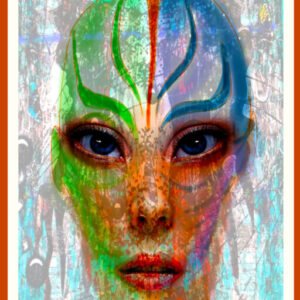
Love, The Last Temptation
A Romantic Novel by L F Peterson
© Copyright 2025, L F Peterson
A Profound Meditation on Solitude, Self-Preservation, and the Elusive Nature of Love
★★★★½ (4.5/5 stars)
In Love, The Last Temptation, we encounter a work that transcends the conventional boundaries of romance fiction to deliver something far more unsettling and authentic – – a psychological excavation of a man who has built his identity around emotional self-preservation, only to find himself confronting the question of whether he is protecting himself or imprisoning himself.
The Architecture of Isolation
The novel’s protagonist, Alex Brennan, is rendered with remarkable psychological precision. A fifty-three-year-old man bearing the scars of three failed marriages, he has retreated to a forty-acre ranch that functions less as a home and more as a fortress against further emotional devastation. The author’s prose is spare yet evocative, particularly in the opening chapters where Alex’s morning ritual – – coffee on the porch, dogs at his feet, land stretching endlessly before him – – establishes both the beauty and the profound loneliness of his chosen exile.
What distinguishes this work from typical romance narratives is its unflinching examination of a character who may be fundamentally incompatible with romantic love. Alex is not a wounded hero waiting to be healed by the right woman; he is a man who has systematically constructed walls so high that even he cannot see over them anymore.
The relationship between Alex and Dina unfolds with painful authenticity. Dina, a widow of five years, represents everything Alex claims to want – – warmth, companionship, connection – – yet the novel brilliantly exposes the gulf between wanting to want something and actually wanting it. Their courtship, conducted largely through texts and phone calls across six hours of geography, becomes a metaphor for emotional distance masquerading as connection.
The author’s handling of the central conflict is masterful. This is not a story of star-crossed lovers kept apart by external circumstances; it is a story of two people whose needs are fundamentally incompatible. Dina needs presence, daily intimacy, integration into her established life. Alex needs space, autonomy, and the freedom to retreat into himself. The tragedy is not that they cannot be together, but that Alex cannot be the person Dina needs without erasing himself – – and perhaps more devastatingly, he doesn’t love her enough to try.
The power imbalance in their relationship is stark and honestly portrayed. Dina would be adding Alex to her existing life; Alex would be dismantling his entirely. The novel doesn’t shy away from this asymmetry or attempt to resolve it through convenient plot mechanics. Instead, it forces both characters – – and readers – – to confront the uncomfortable reality sometimes love, or what passes for it, is not enough.
One of the novel’s most powerful sequences occurs when Alex creates lists comparing what he would gain versus what he would lose by moving to Dina’s town. This scene could have been merely analytical, but the author transforms it into something profound – – a man literally itemizing his identity, trying to calculate whether love can be quantified, whether the self can be priced.
The lists reveal more than Alex intends. What he would gain is largely generic – – companionship, physical intimacy, “not being alone.” What he would lose is specific, concrete, earned through years of painful rebuilding: his ranch, his business, his dogs’ quality of life, his hard-won peace. The imbalance is not just practical but existential.
The novel’s emotional climax arrives not with a dramatic confrontation but with a quiet, devastating question Alex asks himself: “Have I ever truly been in love?” His subsequent inventory of his three marriages reveals a pattern of loving ideas rather than people – – youth, success, normalcy – – and the realization that he has spent his adult life performing love rather than feeling it.
This is where the novel achieves its greatest depth. Alex’s journey is not toward love but toward self-knowledge, and that knowledge is not liberating but limiting. He discovers not that he is capable of great love but that he may be incapable of the kind of love others need from him. The novel refuses to pathologize this or frame it as something to be fixed. Instead, it presents it as a truth to be accepted, however painful.
The epilogue, set one year later, initially appears to offer redemption. Alex returns to Dina to declare his love. It seems we are heading toward the conventional romance ending – – the grand gesture, the second chance, the happily ever after.
But even here, the novel maintains its psychological honesty. Alex’s transformation feels less like genuine change and more like another attempt to be what someone else needs. The final scenes, while hopeful, carry an undercurrent of uncertainty. Has Alex truly changed, or has he simply found new ways to convince himself he cannot be someone he’s not?
The author’s prose is deceptively simple, favoring clarity over ornamentation. Yet within this simplicity lies considerable craft. The repetition of certain images – – morning coffee, the dogs, the land stretching endlessly – – creates a rhythm that mirrors Alex’s ritualized life. The dialogue is particularly strong, capturing the careful navigation of two people trying to build intimacy while protecting their vulnerabilities.
The novel’s structure, divided into six parts with an epilogue, effectively charts Alex’s emotional journey from encounter through temptation to reckoning and, finally, to a tentative awakening. Each section deepens our understanding of Alex’s psychology while tightening the noose of his impossible choice.
The extensive use of text messages and phone conversations could have felt gimmicky, but instead it reinforces the novel’s themes of distance and disconnection. These characters are never more alone than when they are trying to connect through screens and phone lines.
At its core, Love, The Last Temptation is about the cost of self-protection. Alex has spent seven years building a sanctuary that might also be his prison, and the novel asks whether it is possible to dismantle such defenses without destroying the self they were built to protect. It is about the difference between loneliness and solitude, between safety and happiness, between existing and living.
The novel also grapples with questions of compatibility and compromise in relationships. How much should one person sacrifice for another? When does compromise become self-erasure? Is it possible to love someone without being able to give them what they need? These are not questions the novel answers definitively, but it explores them with nuance and empathy.
Perhaps most provocatively, the novel suggests that some people may be fundamentally unsuited for romantic partnership – – not because they are damaged or broken, but because they are wired differently, because their deepest needs are incompatible with the demands of intimate relationship. This is a radical proposition in a culture that treats romantic love as the ultimate human fulfillment, and the novel deserves credit for taking it seriously rather than dismissing it as a problem to be solved.
Love, The Last Temptation is a novel that will frustrate readers looking for conventional romance beats – – the meet-cute, the obstacles overcome, the triumphant union. Instead, it offers something more valuable and more rare: an honest examination of a man confronting his own limitations, his own fears, his own inability to be what others need him to be.
This is a novel about the temptation not of infidelity or passion but of connection itself – – the temptation to believe that love can heal, that the right person can make us whole, that we can change ourselves without losing ourselves. It is about a man who has built his life around the belief that he is better off alone, and who must decide whether that belief is wisdom or cowardice.
The novel’s greatest achievement is that it makes us understand Alex without necessarily sympathizing with him, and it makes us question whether his final choice – – whatever that choice truly is – – represents growth or capitulation. In an age of easy answers and therapeutic optimism, Love, The Last Temptation has the courage to suggest that some questions have no good answers, and that self-knowledge, however painful, may be its own form of grace.
Recommended for readers who appreciate: psychological realism, complex character studies, unconventional romance narratives, and fiction that prioritizes emotional truth over genre expectations.
PART ONE: THE ENCOUNTER
Chapter 1: The Weight of Three Rings
The coffee tastes like forgiveness this morning – – bitter, necessary, earned.
I sit on my porch as the sun breaks over the eastern ridge, painting my forty acres in shades of amber and gold. My dogs, two mutts I rescued from the shelter after the third divorce, chase each other through the tall grass, their joy uncomplicated and pure. I envy them.
Three marriages. Three failures. Three gold bands now sit in a drawer somewhere, monuments to my inability to be what someone else needed. Or maybe monuments to my refusal. I’ve never been sure.
The ranch stretches out before me, every fence post a testament to the work I’ve poured into this place. After Karen took everything in the divorce – – the house, the savings, half the business – – I was left with nothing but debt and determination. Seven years of dawn-to-dusk work, of rebuilding not just a life but an identity.
This land is mine. Paid for with sweat and solitude.
The dogs circle back, tongues lolling, and collapse at my feet. Brie, the larger with the graying muzzle rests her head on my boot. Jake, all nervous energy and mismatched ears, watches the horizon for nonexistent threats.
“Just us, girl,” I tell her. “That’s enough.”
But is it?
The question arrives uninvited, the way they all do lately. I’m fifty-three years old. My back aches in the morning. My business – – a small equipment rental company – – runs itself mostly, which means I have too much time to think. The ranch is beautiful, but beauty doesn’t talk back. It doesn’t laugh at your jokes or touch your hand across a dinner table.
I drain my coffee cup, the last swallow cold.
Loneliness is a strange companion. It doesn’t announce itself. It sits beside you, quiet and patient, until one day you realize it’s been there so long you’ve forgotten what it feels like to be any other way.
My phone buzzes. A reminder about the farrier coming this afternoon. I have two horses, both rescues like the dogs. I seem to collect broken things, give them space to heal. Maybe I’m trying to prove something – – that damaged doesn’t mean disposable.
I wonder if I’m trying to prove it to them or to myself. Perhaps both.
The sun climbs higher. The dogs and horses need feeding. The day needs starting. I stand, my knees protesting, and head inside. The house is too big for one person, but I like the openness.
Three marriages taught me love is a beautiful lie we tell ourselves to make the loneliness bearable. But the loneliness always wins in the end. It’s patient. It waits.
I set my mug in the sink and catch my reflection in the window. Weathered face, gray creeping into my beard, eyes that have seen too many goodbyes.
“This is enough,” I say to the reflection.
The reflection doesn’t look convinced.
—
Chapter 2: Unexpected Connection
The dating profile was my son’s idea.
“Dad, you can’t just hide out there forever,” Mike said during our last phone call. “You’re not dead yet.”
“Feels like it some days,” I joked, but he didn’t laugh.
“I’m serious. Just try. What’s the worst that could happen?”
I could have given him a list. Three marriages’ worth of worst-case scenarios. But something in his voice – – concern, maybe, or pity – – made me agree. So I’d spent an awkward evening trying to summarize my life in a few paragraphs and a handful of photos not looking desperate or deceased.
Fifty-three. Divorced. Ranch owner. Enjoys solitude, dogs, horses, and honest conversation. Not looking for drama.
Honest to the point of unmarketable, but I figured anyone who responded would at least know what they were getting. Or not.
For three weeks, nothing. A few views, no messages. I’d almost forgotten about it.
Then Dina.
Her message arrived on a Tuesday evening as I was reviewing invoices. Simple, direct:
Your profile made me smile. You sound like someone who’s learned honesty is easier than pretense. I appreciate that. I’m Dina. Widow, five years now. Not sure what I’m looking for, but I know what I’m not looking for – – someone who needs fixing or someone who thinks I need fixing. If you’d like to talk, I’m here.
I read it three times.
There was something in her words – – a weariness matching my own, but without bitterness. Grief instead of anger. Loss instead of failure. It felt different.
I typed and deleted four responses before settling on:
Dina, I smiled at your message. Honesty is underrated. I’d like to talk. Tell me something true about yourself.
Her response came an hour later:
Something true? I still set the table for two sometimes. Muscle memory. I’ll be putting out plates and realize I’ve done it again. It used to make me cry. Now it just makes me pause. Progress, I suppose. Your turn – – something true.
I looked around my kitchen. One plate, one fork, one glass in the drying rack.
I’ve trained myself to cook for one. Took years. I used to make too much food and eat leftovers for days, reminded with every meal I was alone. Now I measure everything precisely. I’m not sure if that’s progress or just a different kind of sad.
Maybe it’s both. Maybe that’s okay.
We texted back and forth for two hours that night. Not the superficial dance of early attraction, but something deeper. She told me about her husband, David – – a teacher, kind, taken by cancer at fifty-seven. She spoke of him without the weight of unfinished business, just the ache of absence.
I told her about my marriages. Not the details, not the blame, just the truth: I’d tried to be what they needed and failed each time. Or succeeded at being what they needed and lost myself. I still wasn’t sure which.
Three times? she wrote. That’s either very optimistic or very stubborn.
Probably both. And definitely foolish.
Or brave. Most people quit after one.
Is there a difference between brave and foolish?
Not much. Just the ending.
I laughed out loud at that, startling Brie from her sleep.
We talked every night that week. Phone calls replaced texts. Her voice was warm, with a slight rasp that suggested either too much coffee or too many years of laughter. She asked questions that mattered – – not what I did for a living, but why. Not where I lived, but how it felt to live there.
“Tell me about your ranch,” she said one evening.
I walked her through it verbally, standing on my porch as the sun set. The horses in the pasture, the dogs at my feet, the way the wind sounded different depending on the season. The work it took to maintain it. The profound peace of mind it gave me.
“It sounds like heaven,” she said quietly.
“Some days. Other days it’s just a lot of fence to mend.”
“Isn’t everything?”
By the end of the second week, something had shifted. The loneliness that had been my constant companion felt less heavy. I caught myself smiling at nothing. The dogs noticed – – Brie kept cocking her head at me, confused by this new version of her caretaker.
Then, during a call on a Friday night, Dina said it:
“Why don’t you come visit?”
The question hung in the air between us, loaded with possibility and risk.
“I’d like that,” I heard myself say.
“Good. I’ll warn you – – my house is small. My town is smaller. It’s nothing like your ranch.”
“That’s okay. I’m not coming for the town.”
She laughed, that warm rasp filling the line. “When?”
“How’s two weeks from now?”
“Perfect. Alex?”
“Yeah?”
“I’m nervous.”
“Me too.”
“Good. That means it matters.”
After we hung up, I sat on my porch until the stars came out. Brie and Jake pressed against my legs, sensing something had changed.
I was fifty-three years old. Three marriages behind me. A life I’d built from ruins. And somehow, impossibly, I was nervous about seeing a woman I’d never met in person.
Maybe my son was right. Maybe I wasn’t dead yet.
The thought terrified and thrilled me in equal measure.